Veto AB 2218: Equal Protection, Not Racial Preferences
The governor stopped a bill that carves out special state support and consultation rights based solely on Native American ancestry.
This is opinion — the views expressed are the author's, not news reporting.
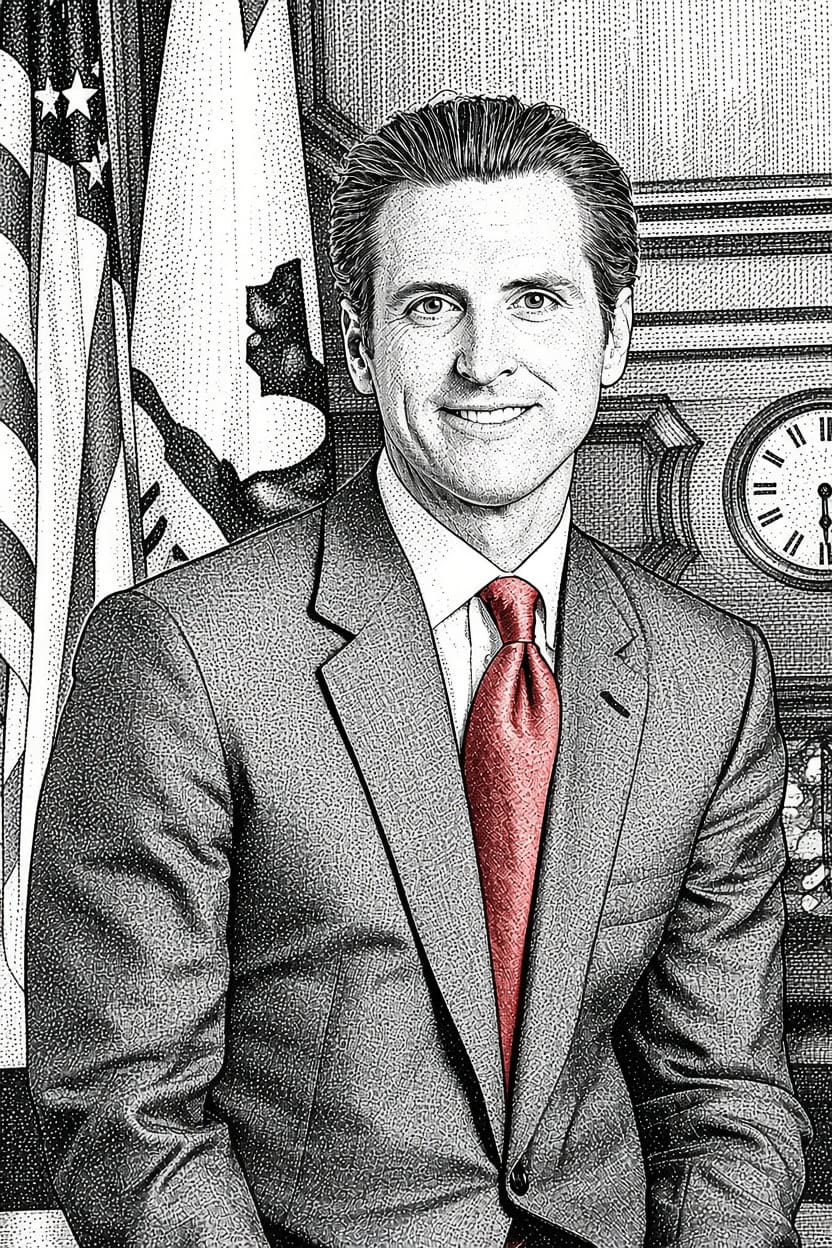
Gov. Newsom has vetoed AB 2218, a bill that would have required the state government to support California Native Americans to maintain cultural and linguistic traditions, practice ecosystem stewardship, and engage in good faith government-to-government consultations with all California Native American tribes regarding policies that may affect tribal communities. The legislation, authored by Asm. Kalra and Asm. Rogers, passed the Assembly 57-0, the Senate 28-0, and the Assembly again 56-0 before reaching the governor's desk. It is now enrolled but vetoed on Sept. 30, 2026.
The bill's digest makes its intent unmistakable. It would have amended the Government Code and Water Code to declare it the established policy of the state to recognize and address inequities inflicted upon all California Native American tribes through financial assistance, protection of tribal beneficial uses, consultation on water projects, plans, and policies, and incorporation of indigenous knowledge to restore and protect ecosystems. State agencies including the State Water Resources Control Board, regional water quality control boards, and the Natural Resources Agency would have been required to incorporate this race-based policy when revising, adopting, or establishing policies, regulations, permits, or grant criteria.
The legislation would have mandated that these entities identify and offer financial assistance to the tribes consistent with existing legal and policy requirements. In cases of dispute between a tribe and a state agency over implementation, the matter would go to the Governor's Office of Tribal Affairs for mediation before any court challenge, complete with specified procedures and timelines. The State Water Resources Control Board would also have been required, during investigations of water rights, to consult with a tribe whose ancestral territory includes the water body at issue upon request.
Our objection is not to culture, language, or environmental care. It is to the bill's explicit use of race, ethnicity, and tribal status as the basis for special state support, financial assistance, consultation rights, and policy influence that other Californians do not receive. The law must treat every Californian the same. Creating a privileged class defined by ancestry violates the principle of colorblind equality that demands government remain neutral on race.
AB 2218 does precisely what we oppose: it singles out one group for preferential treatment under the law. It requires the state to "support California Native Americans" in maintaining traditions and practicing stewardship, while offering no parallel mandate for any other ethnic, cultural, or ancestral group. The mandated government-to-government consultations and required incorporation of "indigenous knowledge" into water policy and ecosystem decisions further embed this ethnic classification into the machinery of state government. We fear the likely result would be unequal access to resources, permits, grants, and influence over public policy based solely on ancestry.
The bill's sponsors acted publicly to advance this race-conscious framework, passing it without a single dissenting vote in either chamber. That unanimity does not make the policy right. It reveals how far Sacramento has drifted from the foundational American commitment to individual rights and equal protection. Merit, not ancestry, should determine how state resources are allocated and how policies are shaped. Taxpayers of all backgrounds foot the bill for these preferences; they deserve government that treats them equally.
Financial assistance targeted by ancestry, protection of "tribal beneficial uses" not extended to others, and mandatory consultation rights unavailable to non-tribal citizens all flow from the same flawed premise: that government should sort citizens by bloodline and dispense rights accordingly. This is the opposite of colorblind equality. It replaces the ideal that every Californian stands equal before the law with a system of group preferences that inevitably breeds resentment and litigation.
The governor's veto correctly halted this expansion of race-based policymaking. Although the veto message itself does not elaborate, the decision aligns with the imperative to reject legislation that institutionalizes unequal treatment. Californians of every background deserve the same rights under law. No group should be elevated above another by legislative decree.
AB 2218's defeat is a small but important victory for the principle that government must be blind to race. True equity comes not from carving out exceptions based on ethnicity but from applying the same rules to everyone. The state should protect the rights of all individuals equally, without regard to ancestral claims or tribal status. Anything less replaces equal justice with identity politics and taxpayer-funded division.
Lawmakers who supported this bill should reconsider their commitment to equal protection. The path forward is not more preferences but a renewed fidelity to the idea that every Californian, regardless of heritage, stands equal in the eyes of the state. Only then can we fulfill the promise of a government that serves all its people without favoritism or fear.
Get the print edition in your mailbox
San Diego Newsline is mailed every week to San Diego County homes — 52 editions for $89.95 a year.
Subscribe — $89.95/yearProduced by the San Diego Newsline newsroom from the public sources linked above. See our standards.