San Diego's $4.2 Billion Midway Rising Deal Heads to Committee Friday; IBA Backs Terms as 'Fair and Reasonable'
The Independent Budget Analyst projects the city would net $38 million to $68 million in today's dollars from a 105-year ground lease of 48.5 acres of public land at the Sports Arena site.
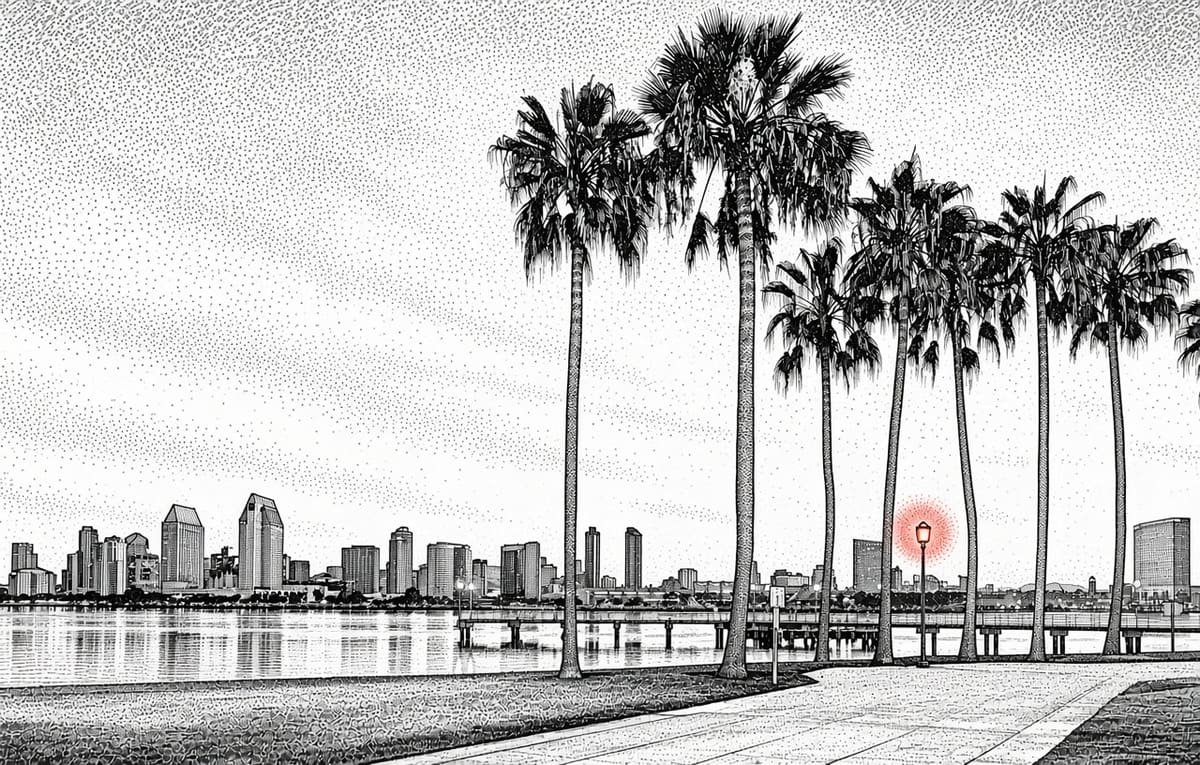
The San Diego City Council's Land Use and Housing Committee will take its first formal step Friday on the long-delayed Midway Rising redevelopment — a $4.2 billion proposal to replace the aging Pechanga Arena with a 16,000-seat entertainment center, more than 4,200 apartments and 130,000 square feet of retail on 48.5 acres of city-owned land in the Midway District.
The deal reaches the committee with a qualified endorsement from the city's Independent Budget Analyst, whose review (Report 26-24, issued Oct. 12) calls the proposed agreement "a fair and reasonable transaction for the City" while flagging the "meaningful opportunity costs" the public would absorb.
Under the terms, the city would dedicate nearly 50 acres of public land through ground leases running approximately 105 years, and would collect no ticket fees during the arena's first decade of operation.
What the city would receive
The IBA estimates the city would take in $884 million to $1.23 billion in nominal ticket fees and rental revenue over the life of the agreements. Discounted to today's dollars at 4.5 percent, that total falls to $38.1 million to $68.5 million.
Those returns are heavily back-loaded. The arena lease calls for no ticket fee for the first 10 years, then $1.50 per paid admission rising 3 percent annually. The city would receive a guaranteed 25 percent of ticket fee revenue; the remaining 75 percent is deferred, without interest, until the developer achieves a 16.5 percent internal rate of return on the arena — a threshold the IBA says may never be reached.
The developer — the Midway Rising team, whose primary equity investor is Stan Kroenke — would finance and build the project at its own expense: a $526.4 million arena, roughly $460 million in upfront infrastructure, $1.54 billion in market-rate housing, $111.9 million in retail and $1.59 billion for 2,000 affordable units.
The tax-increment piece
To reimburse $378 million of that infrastructure spending, the city would help form an Enhanced Infrastructure Financing District that diverts future property tax growth — from both the city's and the county's general funds — to repay the developer over roughly five decades. The IBA cautions that the district's assumed 4 percent annual growth in assessed value "may be optimistic" for a site dominated by one asset class.
Opponents at Save Our Access, which has successfully sued the city over the project in the past, argue the public is surrendering the best return on its own land. "We own this. And the question is why are we saying the best return must be for the private developer instead of saying the best return is for the general public?" president John McNab told KPBS.
If the committee advances the agreement Friday, the item heads to the full City Council in November. The development team says it aims to break ground by early 2028, with construction lasting 10 to 15 years.
Sources
Get the print edition in your mailbox
San Diego Newsline is mailed every week to San Diego County homes — 52 editions for $89.95 a year.
Subscribe — $89.95/yearProduced by the San Diego Newsline newsroom from the public sources linked above. See our standards.