High-Speed Rail Inspector General: Funding Could Run Out by December 2027, Authority 'Obscured Basic Facts'
The California High-Speed Rail Authority faces a $9.5 billion funding gap and excluded up to $6.6 billion in interest costs from its $35.7 billion Merced-to-Bakersfield estimate, the state's own watchdog found.
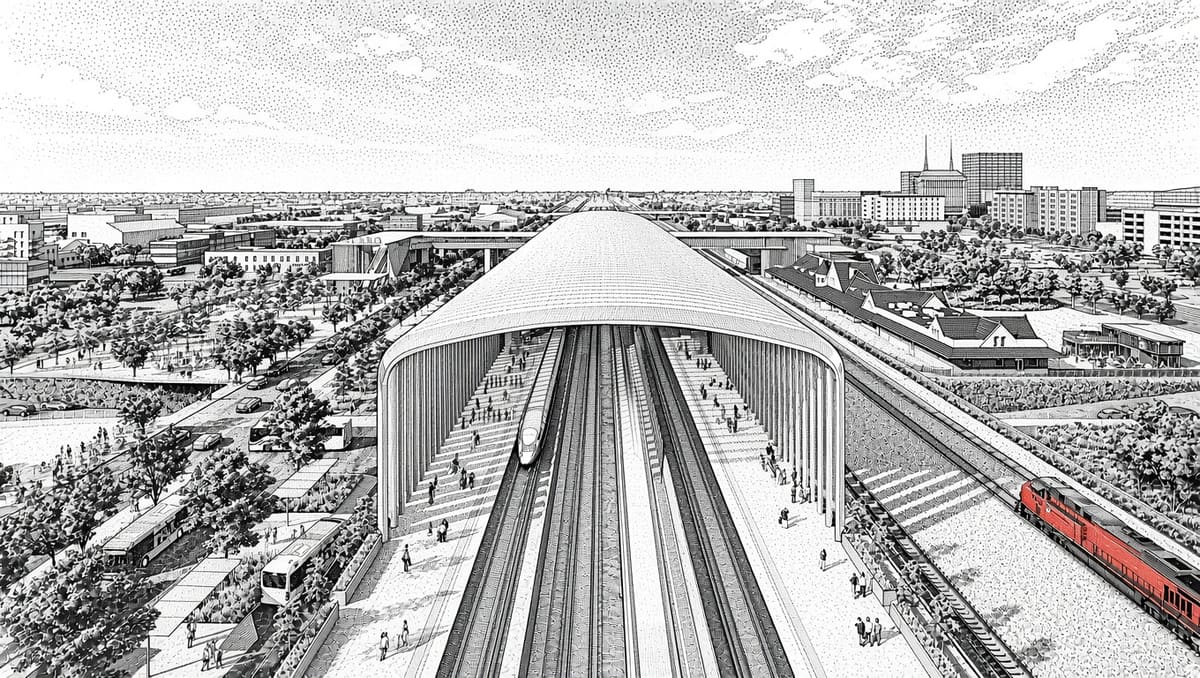
California's high-speed rail project could run out of money in 14 months unless the state secures billions in new financing, according to a review by the project's own inspector general that also found the High-Speed Rail Authority "obscured basic facts about the project" from lawmakers and the public.
The Office of the Inspector General for High-Speed Rail concluded in its review of the authority's 2026 Business Plan that the agency "will exhaust its current funding resources as soon as December 2027 if it does not secure financing" to bridge a cumulative $9.5 billion funding gap across five fiscal years.
The inspector general reported that the authority needs $2.2 billion in fiscal year 2027-28 alone to keep construction on schedule, with annual gaps of $2.7 billion, $2.3 billion, $1.6 billion and $776 million in the four years that follow.
Hidden Costs
Beyond the immediate cash crunch, the inspector general found the authority's official $35.7 billion estimate for the Merced-to-Bakersfield segment excludes between $3.6 billion and $6.6 billion in interest costs that would result from borrowing — costs the authority acknowledged but chose not to include because "it is too soon to know how much it will need to borrow and when, or what interest rates it will pay."
The estimate also leaves out a $1.2 billion contingency shortfall, $816 million in construction costs covered by third parties, and $1.7 billion for required infrastructure, according to the report.
The inspector general further found the authority failed to meet statutory reporting requirements under Assembly Bill 377, which mandated an updated funding gap estimate and a strategy to address it. "Due to this limitation, the Authority did not meet" any of the AB 377 requirements, the report stated.
Schedule and Scope Changes
The authority's plan quietly reduced the first operating segment from 171 miles to 162 miles and disclosed a nine-month schedule slip without explanation, the inspector general found. While the authority still points to a 2032-33 service start, the watchdog said September 2034 "is the appropriate estimate" and that even this may be "likely insufficient."
The authority also cut its initial train order from six trainsets to three and dropped federal Buy America requirements for the first trains, moves the inspector general said lower near-term costs but do not change the underlying financing problem.
In a written response included in the report, the authority disputed the findings as "differences in interpretation rather than gaps in information" and said it "believes that it met these statutory requirements."
The inspector general's office stood by its conclusions.
What Comes Next
The financing decision now falls to California's next governor, who takes office in January 2027 alongside a Legislature facing projected annual budget deficits of $25 billion to $30 billion. Options under consideration include internal state borrowing, revenue bonds, and private financing — each carrying interest costs the current estimate does not show.
The authority's revised train solicitation is due October 16, and its next project update report is due March 1, 2027.
Sources
Get the print edition in your mailbox
San Diego Newsline is mailed every week to San Diego County homes — 52 editions for $89.95 a year.
Subscribe — $89.95/yearProduced by the San Diego Newsline newsroom from the public sources linked above. See our standards.