California's appointed officials miss by billions and keep their jobs
From the bullet train to the Coastal Commission, the state's own auditors and court files show how little a Sacramento failure costs the people who made it.
This is opinion — the views expressed are the author's, not news reporting.
Marc Andreessen posted "The Techno-Optimist Manifesto" on the a16z.com website on Oct. 16, 2023. Most people remember what it said about artificial intelligence, cheap energy and abundance. The line I keep coming back to sits in the section titled "The Enemy," where he describes the credentialed expert class, unelected and unaccountable in his words, as "playing God with everyone else’s lives, with total insulation from the consequences."
He was describing a worldview. California has turned it into an org chart. The state's largest spending and regulatory decisions are made by boards, commissions and department heads that no voter picked and no voter can fire. Here are six cases, taken from the state's own auditors, inspectors and court files.
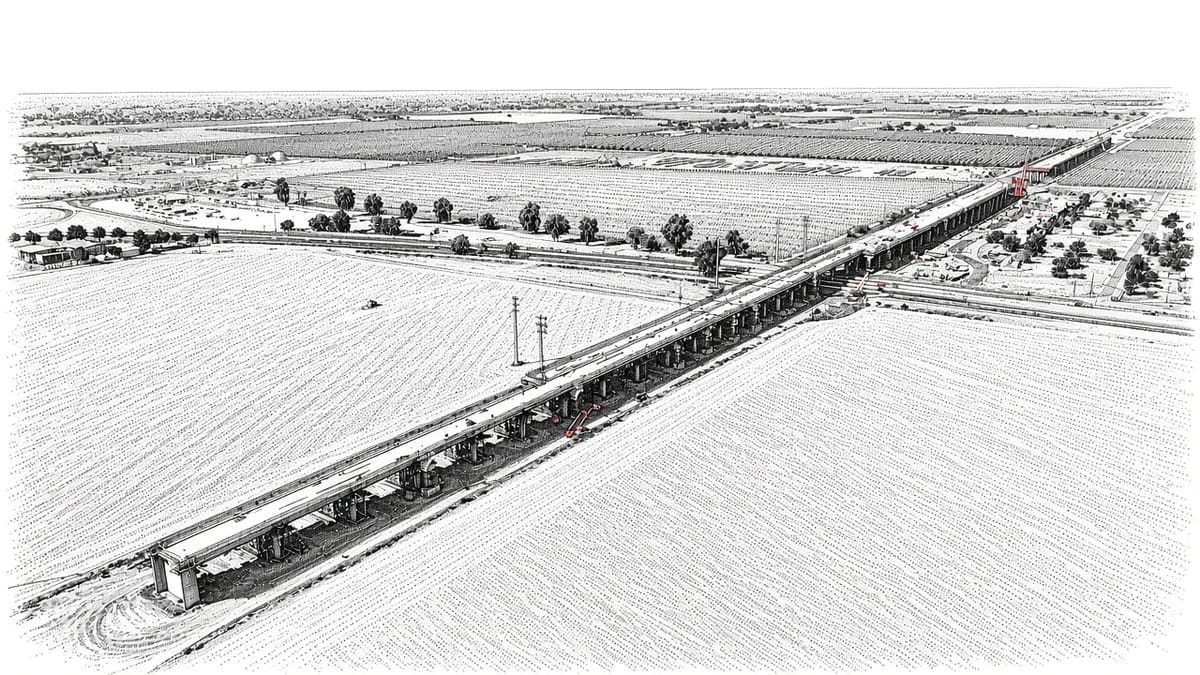
The bullet train. In 2008 voters approved a $9.95 billion bond for high-speed rail. The ballot pamphlet told them the authority estimated the entire system, reaching Sacramento and San Diego, at about $45 billion. The authority's 2026 Business Plan puts Phase 1 alone, San Francisco to Los Angeles and Anaheim, at $126.1 billion, with service in 2040. That is the trimmed version. Built the way it was promised, the plan says, Phase 1 would cost $231.3 billion. The authority has spent $14.6 billion through 2025, and no passenger has ridden it.
On July 31, 2026, the project's own Office of the Inspector General told the governor and legislative leaders that the authority "obscured basic facts about the project" and could run out of money as soon as December 2027 without new financing. On Sept. 15 the same office substantiated complaints that the authority paid consultant travel it never approved in advance, including about $81,000 that appeared unallowable, among it trips to gyms, an escape room and a nightclub, plus $543,400 that broke contract terms. Staff told investigators they often paid because they assumed the CEO wanted the trips.
The board's response to its CEO, Ian Choudri, came earlier. On Aug. 28, 2025, it voted that he had met his first-year goals and awarded him a one-time $25,000 payment. The inspector general's report says the Merced-to-Bakersfield schedule slipped nine months between August 2025 and March 2026.
Unemployment fraud. By October 2021 the Employment Development Department reported that about $20 billion in pandemic jobless benefits, 11 percent of everything it paid, was likely fraudulent. The State Auditor found in January 2021 that EDD waited months to tighten fraud controls and paid about $10.4 billion on claims whose identities it could not verify. The director announced her retirement in October 2020 after nearly four decades in state service. Her boss, state Labor Secretary Julie Su, was confirmed 50-47 by the U.S. Senate in July 2021 as deputy secretary of labor and later ran the department as acting secretary.
Homelessness. The State Auditor reported in April 2024 that California allocated nearly $24 billion for homelessness and housing in the five fiscal years ending in 2022-23, and that the Interagency Council on Homelessness "has not consistently tracked and evaluated" the results. Of five programs the auditor reviewed, two were likely cost-effective. The administration's answer was a reorganization. As of July 1, 2026, the council sits inside a new California Housing and Homelessness Agency.
Your power bill. The five members of the California Public Utilities Commission are appointed by the governor. The commission's own Public Advocates Office reported in July that SDG&E's average residential rate reached 45.5 cents per kilowatt-hour, up 117% since January 2014, while consumer prices rose 42%. On Dec. 18, 2025, the commission voted 4-1 to let SDG&E earn a 9.93% return on equity in 2026. President Alice Reynolds and Commissioners John Reynolds, Karen Douglas and Matthew Baker formed the majority. Commissioner Darcie Houck dissented.
The Coastal Commission. On Oct. 10, 2024, the appointed commission voted 6-4 to object to a federal plan letting SpaceX raise Falcon 9 launches at Vandenberg from 36 to 50 a year. According to SpaceX's lawsuit, Commissioner Caryl Hart said the company's head "has aggressively injected himself into the Presidential race," and another commissioner faulted Elon Musk for "tweeting political falsehoods." In an April 2026 settlement the commission admitted that commissioners' statements "showed political bias" and were improper, apologized, and agreed it will never require a coastal permit for SpaceX's launch program at its two Vandenberg launch complexes. Hart signed the apology letter as the commission's vice chair.
Medi-Cal. In March 2025 the Department of Finance moved $3.4 billion in a General Fund loan into Medi-Cal because costs ran ahead of the budget. The Legislative Analyst's Office later put 2024-25 General Fund Medi-Cal spending $2.6 billion above the enacted budget, and the state ended up borrowing $4.4 billion over two years and pushing the repayment into the future. The budget that followed cut about $4.7 billion from Medi-Cal, including a freeze on new full-scope enrollment for undocumented adults. The estimates came from appointed officials. Providers and taxpayers absorbed the miss.
In none of these cases could I find a public record that anyone responsible was fired, demoted or docked pay. A company that tells its lenders a project costs $45 billion and later says $126 billion gets new management or a bankruptcy judge. An elected official who presides over a $20 billion loss faces a recall or a primary opponent. A gubernatorial appointee faces a Senate confirmation hearing once, if at all.
That leaves the people who do face voters. The governor appoints the CPUC, the directors of EDD and the Department of Health Care Services, members of the rail authority board and a third of the Coastal Commission, and the state Senate confirms many of them. California chooses a new governor and fills 20 Senate seats and all 80 Assembly seats on Nov. 3. Ballots are already in the mail. Ask every candidate one question: name the official you would remove first.
Sources
- a16z — Marc Andreessen, The Techno-Optimist Manifesto (posted Oct. 16, 2023), section 'The Enemy': 'unelected, and unaccountable – playing God with everyone else’s lives, with total insulation from the consequences.'
- California Secretary of State — 2008 Voter Information Guide, LAO analysis of Prop. 1A ($9.95B bond; authority's 2006 estimate of about $45B for the entire system)
- California High-Speed Rail Authority — 2026 Business Plan (June 2026): Phase 1 $126.1B, service 2040; full promised Phase 1 scope re-estimated at $231.3B; $14.6B invested 2006–2025
- Office of the Inspector General, High-Speed Rail — Review of the 2026 Business Plan (July 31, 2026): 'obscured basic facts about the project'; funding exhausted as soon as December 2027; nine-month M-B slip Aug 2025–Mar 2026; up to $9.5B financing needed
- OIG-HSR — Investigation #2026-INV-08, Wasteful and Unallowable Travel Expenses for Contracted Consultants (Sept. 15, 2026): $81,000 apparently unallowable, $543,400 contrary to contracts, $680,500 not pre-approved
- CHSRA Board — Resolution #HSRA 25-08 (Aug. 28, 2025 closed session): CEO Ian Choudri met year-one metrics, receives one-time $25,000
- CHSRA Board — Resolution #HSRA 26-01 (Jan. 2026): year-two criteria for second $25,000 payment, vote 8-0
- EDD — News Release 22-34 (Oct. 7, 2022): by October 2021 approximately $20B (11% of total benefits) likely fraudulent
- California State Auditor — Report 2020-628.2 (Jan. 28, 2021): about $10.4B paid on claims EDD could not verify
- Labor & Workforce Development Agency — EDD Director Sharon Hilliard to Retire End of Year (Oct. 30, 2020)
- Senate Democrats — Roll call vote, confirmation of the Su nomination (July 13, 2021), 50-47
- California State Auditor — Report 2023-102.1, Homelessness in California (April 2024): nearly $24B allocated 2018-19 through 2022-23; Cal ICH has not consistently tracked and evaluated; two of five programs likely cost-effective
- HCD — Governor restructures state government (July 11, 2025): Cal ICH moves into new California Housing and Homelessness Agency effective July 1, 2026
- CPUC Public Advocates Office — Q2 2026 Electric Rates Report (July 2026): SDG&E $0.455/kWh; +117% since 1/1/2014 vs CPI +42%
- CPUC — Decision 25-12-043 (Dec. 18, 2025): SDG&E 2026 ROE 9.93%; signed by A. Reynolds, J. Reynolds, Douglas, Baker; Houck dissent
- U.S. District Court C.D. Cal. — SpaceX v. California Coastal Commission, No. 2:24-cv-08893, Complaint (Oct. 15, 2024): 6-4 vote, 36 to 50 launches, commissioner quotes
- SpaceX v. California Coastal Commission — Settlement Agreement (filed Apr. 28, 2026): admits statements 'showed political bias'; no CDP in perpetuity for SpaceX launch program at SLC-4/SLC-6; each party bears own fees
- SpaceX v. California Coastal Commission — Exhibit C, Commission apology letter (April 8, 2026), signed Dr. Caryl Hart, Vice Chair
- CourtListener — docket: order of dismissal with prejudice (Apr. 17, 2026)
- Legislative Analyst's Office — The 2025-26 California Spending Plan: Health: DOF executed $3.4B loan March 2025; $4.4B loan over two years; 2024-25 GF Medi-Cal $2.6B over budget act; ~$4.7B Medi-Cal solutions incl. undocumented adult enrollment freeze
Get the print edition in your mailbox
San Diego Newsline is mailed every week to San Diego County homes — 52 editions for $89.95 a year.
Subscribe — $89.95/yearProduced by the San Diego Newsline newsroom from the public sources linked above. See our standards.