LAFCO votes to explore replacing homelessness nonprofit with government special district, raising prospect of new taxing authority
The San Diego Local Agency Formation Commission voted unanimously Nov. 2 to have staff explore creating a special district to oversee the region's homelessness response, potentially dissolving the nonprofit Regional Task Force on Homelessness after 42 years.
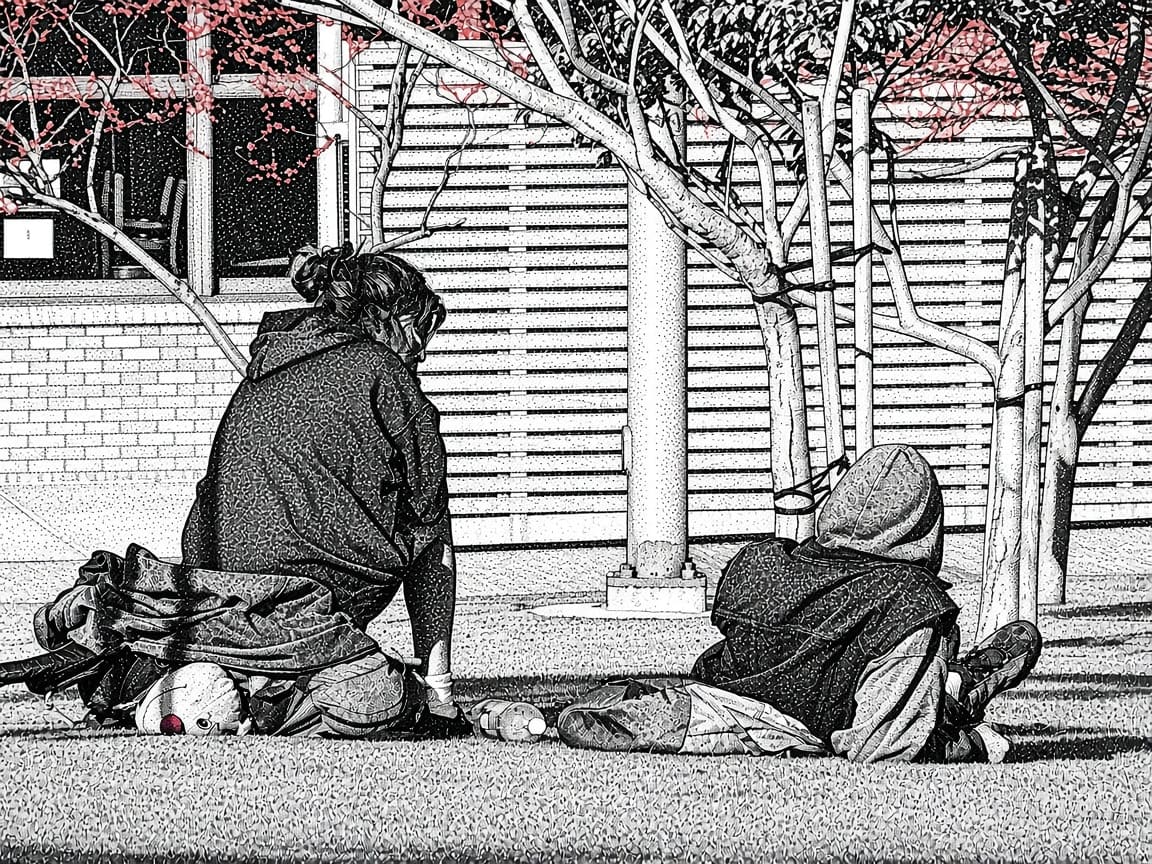
An obscure county agency is moving to reshape who controls San Diego's homelessness response — a shift that could dissolve the nonprofit that has coordinated regional efforts for four decades and replace it with a government special district.
On Nov. 2, the San Diego County Local Agency Formation Commission (LAFCO) voted unanimously to have staff explore creating a special district that would absorb the functions of the Regional Task Force on Homelessness (RTFH), a private nonprofit that has administered the region's Continuum of Care since incorporating in 2004. The push is being driven by City Councilmember Stephen Whitburn, whose District 3 covers downtown and the urban core.
LAFCO, a state-created body that typically resolves boundary disputes and inter-agency quarrels, presented a white paper critical of RTFH's structure, specifically faulting the nonprofit for not being subject to public meeting and records laws despite stewarding millions in state and federal funds each year.
"The current model's strongest advantages are largely those of incumbency and demonstrated performance. Its clearest limitation, by contrast, is structural," the white paper reads. "Because the coordinating role sits with a nonprofit, the public resources and responsibilities at the system's center are not matched by the accountability obligations inherent to a governmental body."
A special district model — one of three alternatives the white paper examined alongside a county or city agency and a joint powers authority — could place the functions currently performed by RTFH under "a new unit of local government" with "both regional direction and administrative oversight." Special districts in California can levy taxes and fees, raising the prospect of a new taxing entity.
Whitburn, who serves as a LAFCO commissioner, has been working on the effort for more than three years, according to reporting by the San Diego Union-Tribune.
11-fold spending increase
The white paper notes that the City of San Diego alone has increased its homelessness spending roughly elevenfold — from $9.5 million in fiscal year 2017 to $109.5 million in fiscal year 2027 — and now maintains a dedicated department. The County established its own Office of Homeless Solutions in 2021.
"What was once handled at the margins has clearly become a core, recurring, tax-supported service — in short, a municipal function," the white paper states.
Despite the spending surge, the region's unsheltered homeless population rose from 4,106 in 2022 to 6,110 in 2024, with 57.7% of the homeless population unsheltered in 2025.
What comes next
LAFCO Executive Officer Keene Simonds said staff is working on a scope and feasibility report to be presented to commissioners early next year. Whether LAFCO has the authority to dissolve RTFH on its own remains unclear.
RTFH, which was established in 1983 under the San Diego mayor's office before becoming a nonprofit in 2004, conducts the annual point-in-time count, collects homelessness data and stewards HUD Continuum of Care funding for the region. The organization pushed back on the white paper in a letter to LAFCO, requesting corrections to "factual and methodological errors" and asking the commission to separate "the accountability advantages a government agency might offer" from "any evidence that changing the lead agency would improve results for people experiencing homelessness."
RTFH CEO Tamera Kohler did not immediately respond to a request for comment.
The LAFCO commission includes representatives from the county, multiple cities, fire protection districts, irrigation districts and two public members.
Sources
- San Diego Union-Tribune — Does an obscure agency have the power to dismantle the region's homeless task force? (Nov. 22, 2026)
- San Diego LAFCO — White Paper: Homeless Services + Governance in San Diego County (Administrative Draft, November 2026)
- San Diego Union-Tribune — Agency votes to explore special district to oversee region's homelessness crisis (Nov. 2, 2026)
Get the print edition in your mailbox
San Diego Newsline is mailed every week to San Diego County homes — 52 editions for $89.95 a year.
Subscribe — $89.95/yearProduced by the San Diego Newsline newsroom from the public sources linked above. See our standards.